
Infrastructure Required for Zeppelin Crash Game in UK
GGBet Casino Neustále Nepozastaví výplaty hráčom na Slovensku
June 26, 2026Fresh Member Welcome Pack at LuckyCapone Casino in UK
June 26, 2026
Let’s discuss what it truly demands to launch a game like Game Zeppelin Crash Jackpots for players in the UK. It’s beyond a fun idea and some code. You must have a technical foundation that’s unshakeable, completely legal, and built to manage the pressure of real-time betting. This foundation has to assure fairness, safeguard every bit of player data, and stay online no matter how many people connect on a Saturday night. Getting this right is the gap between a fleeting experiment and a prosperous, trusted platform. Here, we’ll outline the nine essential components you must construct, concentrating on the specific demands of the UK market and its strict regulatory environment.
1. The Foundation: UK-Gaming Licensed Servers
Your starting point isn’t code or graphics. It’s a dedicated server in a data centre licensed by the UK Gambling Commission. This is a legal requirement, not an choice. The UKGC mandates that all data and financial transactions for UK players happen on servers within a whitelisted jurisdiction, which includes Great Britain. You must work with a data centre provider that is expert in this highly compliant world. They need to offer guaranteed geographical location, physical security measures, and thorough audit records. This compliant server infrastructure is your non-negotiable cornerstone. Everything else gets built on top of it. Partnering with these providers often means your hardware resides in a dedicated, strictly regulated area, managed to the exact requirements your UKGC license requires.
8. Scalability Future-Proof Strategy
You build with scalability in mind. The framework should expand horizontally. This indicates you can add more additional game servers or database replicas as your player base expands, without a major redesign. Using containerisation with Docker and management with Kubernetes makes this operation of scaling and refreshing services more streamlined and dependable. You also plan with an API-first, modular method. This renders it simpler to incorporate new capabilities later—like a live chat room, tournament types, or entirely new titles—without affecting the existing system. The aim is a solution that can go live smoothly today but also evolve over the coming years.
3. Always-On, Fast-Response Server Design
Envision the Zeppelin is ascending and your connection stops. That scenario will lose players immediately. To prevent it, your server setup demands two things: redundancy and proximity. Using a cloud platform like AWS or Google Cloud, you establish a cluster of servers particularly for the UK region. You configure load balancers to distribute traffic and use Content Delivery Networks to store game art and code near to players. The goal is 99.99% uptime. You also design for auto-scaling. When player numbers increase sharply, the system should automatically spin up new server instances to manage the load. This guarantees the game feels responsive and smooth, regardless if there are fifty players or fifty thousand.
7. Responsible Gambling Tools and Backend Administration
Social responsibility features are mandatory in the UK, not optional add-ons; they form part of the core system. You are required to implement tools like deposit limits, session timers, and self-exclusion directly into the account system. The system ought to observe play patterns for signs of risk, activating automated alerts and messages to the player. To administer the entire platform, you require a secure admin panel. Access should be restricted by VPN and multi-factor authentication. From this control centre, your team can oversee live games, handle customer support issues, process withdrawals, and generate the reports required by the UKGC. This backend is essential for both daily operations and keeping your license.
4) Real-Time Data Processing & Secure Payments
Two critical streams of data must flow perfectly: the game action and the money. On the game side, you need a stable, instant connection to every player’s browser. WebSocket technology handles this, enabling the server send the rising multiplier to all screen at the exact same moment. On the financial side, you must have fortress security. You implement payment gateways that are both popular in the UK and conforming with the PCI-DSS Level 1 standard. This covers debit cards, e-wallets like PayPal and Skrill, and bank transfers via Open Banking. Every transaction gets secured end-to-end with TLS 1.3. You should also use tokenisation, which signifies you store a token instead of the actual card number on your servers. This mix provides the instant thrill of the game alongside solid financial security.
Six. Database Strategy, Monitoring & Security
Your records, your watchfulness, and your defences create a critical trio. For data, a single database isn’t enough. You utilize a fast, in-memory database like Redis to manage the live game state for speed. Then, a primary SQL database like PostgreSQL keeps all permanent records—financial transactions, user accounts, game history—with full ACID compliance for accuracy. To oversee everything, a monitoring stack with tools like Prometheus and Grafana provides you a live dashboard of system health, with alerts for any unusual activity. Wrapping it all is a security layer. This features next-generation firewalls, intrusion detection systems, and professional DDoS protection from a service like Cloudflare. Key practices within this setup are non-negotiable:
- Hiring certified ethical hackers to perform regular penetration tests, discovering weaknesses before criminals do.
- Formulating all database queries with parameterised inputs to block SQL injection attacks.
- Setting up a Web Application Firewall to block malicious web traffic before it reaches your servers.
- Keeping immutable logs of all admin actions for a perfect audit trail.
2. Verifiably Fair Gaming Engine & RNG Certification
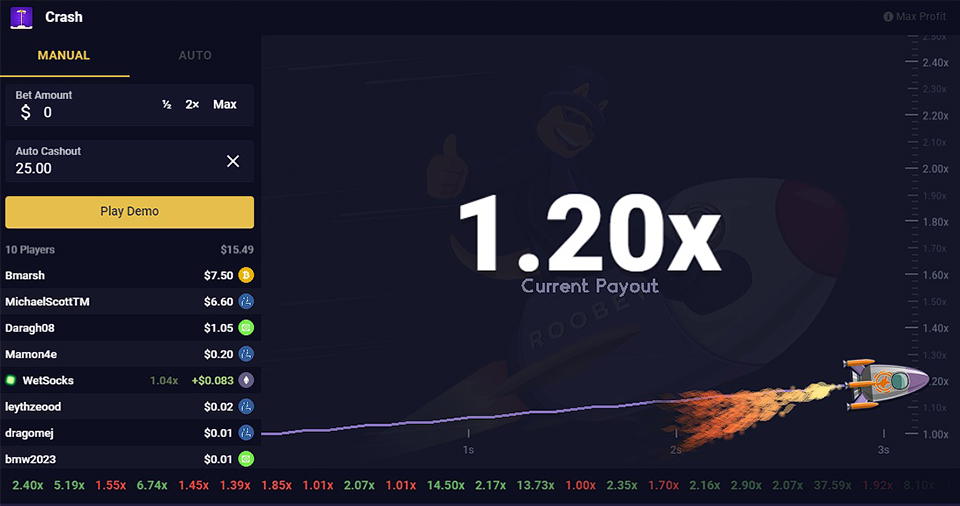
This game’s core mechanic, how crash points are generated, needs to be above reproach. This demands a verified Random Number Generator. You require an RNG that has passed thorough testing by an independent laboratory such as eCOGRA or iTech Labs. Their publicly available certification confirms the game’s outcomes are truly random. However, for today’s players, specifically in markets influenced by cryptocurrency, that is frequently insufficient. This is when a verifiably fair system becomes relevant. Through this mechanism, each game round’s outcome is generated from a cryptographic seed. Following the round, players are able to verify that seed to verify the result was set in advance and could not be altered once wagers were made. This level of transparency builds a deeper trust. It shows players that the game algorithm is sound is open for their scrutiny.
5. Player Account Management & KYC Platforms

Each player needs a secure account. You build a specialized system to oversee registration, login with multi-factor authentication choices, and profile management. Integrated directly into this is a strong Know Your Customer workflow. This system handles the verification requirements required by UK law. It reviews ID documents, confirms a player’s age, and validates their address against trusted databases. The aim is a system that is easy for legitimate users but tight enough to prevent fraud and underage sign-ups. All the personal data gathered here is encrypted, both when saved and when transmitted over the internet. This system creates the protected hub for each player’s activity on the platform.
Common Questions
Why does the server location be relevant for UK players?
UK law mandates it. The Gambling Commission’s rules stipulate that the infrastructure for UK-facing remote gambling has to be in a whitelisted jurisdiction, which encompasses Great Britain. This places the operation under UK data protection and fairness laws. A practical benefit offers lower latency, which makes the game faster and more responsive for players in the UK.
In what way can I be sure the Zeppelin Crash game is truly fair?
Two mechanisms ensure this assurance. First, the Random Number Generator is certified by an independent testing lab like iTech Labs. Second, the provably fair system allows you to verify each round yourself. After a game, you can check the cryptographic seed that determined the crash point, proving it was set before the round began and could not be altered.
What payment solutions will be available for UK players?
The platform will accept the payment methods UK players use most. This includes Visa and Mastercard debit cards, e-wallets such as PayPal and Skrill, and direct bank transfers using Open Banking. All payment processing goes through gateways that meet the strict PCI-DSS Level 1 security standard.
In what way is my personal and financial data protected?
We utilize encryption standards you would look for from a bank. Data transferring between your device and our servers is protected by TLS 1.3 encryption. When stored, it’s protected with AES-256 encryption. We also use tokenisation for card details, so your actual card numbers are never stored on our systems. Regular security testing and compliance with UK GDPR law offer additional layers of protection.
What happens if the website goes down mid-game?
The high-availability design makes this very rare. But if a technical issue occurs, the provably fair system ensures a fair settlement. The crash point for that specific round is already generated and locked in. When service is restored, all bets are settled based on that predetermined outcome, so no player loses money unfairly due to the outage.
What responsible gaming tools are built into the platform?
The tools required by the UKGC are built directly into your account options. You can set daily, weekly, or monthly deposit caps. You can take a timeout for a set period, or choose self-exclusion. The system may also alert you with reality checks during long sessions and provide easy links to support services like GamCare.
Is it possible to play Zeppelin Crash on my mobile phone?
Absolutely. The game is developed with flexible web design, so it conforms to fit any screen, from a smartphone to a desktop monitor. You get the full experience straight in your mobile browser, with no app download required. The real-time gameplay and all features operate the same way on a phone as they do on a computer.
