
Why a Good Solana Explorer Feels Like a Swiss Army Knife for Tokens
🚀 Top Secrets news 2025 and hot news – fae2cb20
July 20, 2025📰 Update news 2025 hot news – 202c9b04
July 21, 2025Okay, so check this out—I’ve stared at block explorers for years. Wow! They can be oddly humble tools. They look plain, but they reveal the plumbing of entire ecosystems. My instinct said: don’t underestimate them. Initially I thought all explorers were basically the same. Actually, wait—let me rephrase that: they share core functions, though the differences matter a lot when you’re debugging a token drop or tracing a weird transfer.
Whoa! When I first used Solana explorers, something felt off about transaction timestamps and how quickly confirmations appeared. Hmm… confirmations on Solana are fast, sure, but the way explorers surface that data varies. For a while I relied on multiple pages—wallet UIs, RPC logs, and a visual explorer—because one view rarely told the whole story. This kind of triangulation still saves me time. On one hand you want speed; on the other hand you need depth. And actually, those two aims often clash, though usually you can manage both if the explorer is well designed.
Explorers are two things at once: a debugging console and a public ledger UI. Short answer: they let you inspect blocks, transactions, accounts, and token metadata. But longer answer: they help you understand intent. Did that token transfer include a program instruction? Was the minting done by a verified mint authority or by a sneaky script? The UI usually gives clues, and sometimes the clues are buried behind technical jargon. I get a kick from digging until a messy token story becomes clear—it’s kind of detective work.
What I look for in a good Solana explorer
Short list first. Quick access to recent blocks. Clean transaction detail pages. Token metadata rendering (symbols, logos). Token holder distribution—very useful. Search by address, transaction signature, block height, or token mint. Alerts for program upgrades or suspicious token behavior. That’s the baseline. But here’s what really differentiates a tool: intuitive token tracking. The ability to click a mint and see holders, recent transfers, and any associated metadata in a single flow is powerful.
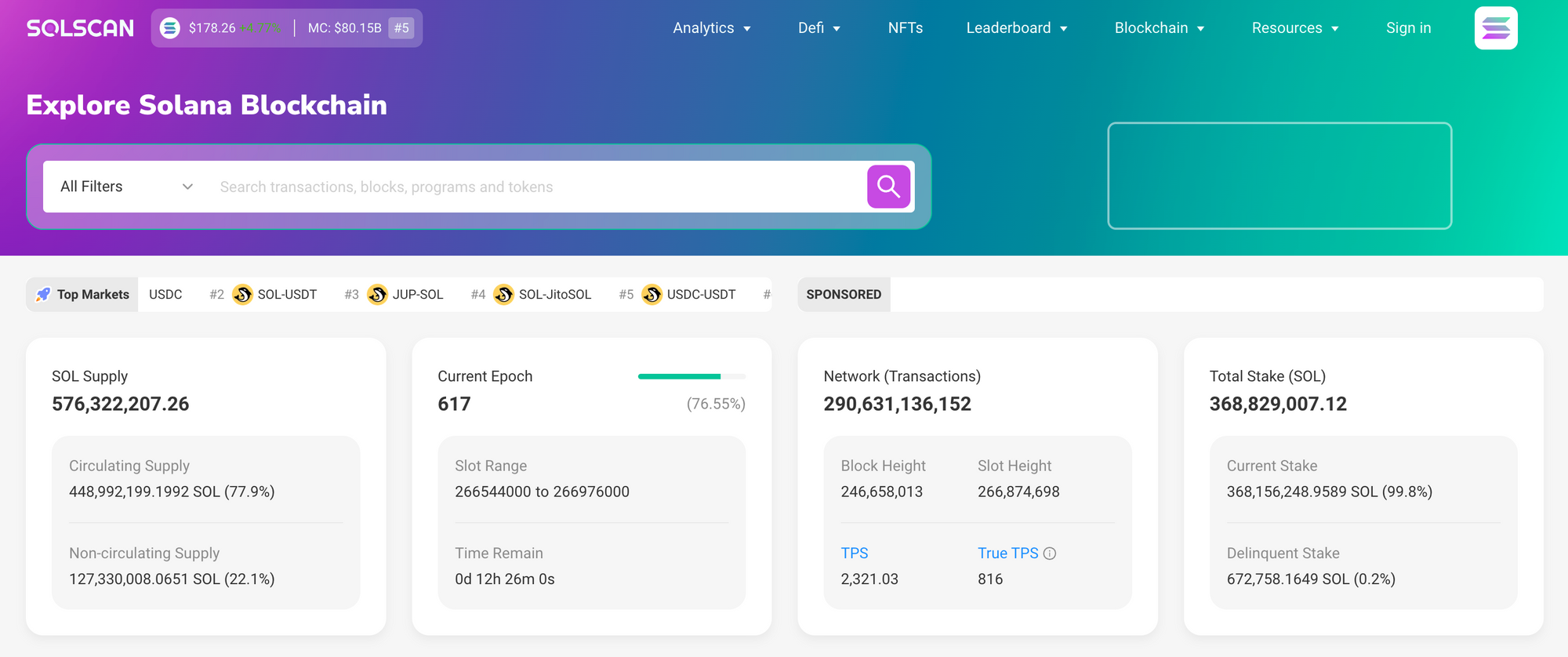
Okay—real talk. I’m biased, but one explorer I’ve used a lot is solscan. Seriously? It saved me on more than one late-night incident. The token pages show holders and recent transfers quickly. The contract/program tabs let you see instruction decoding in a readable way. My first impression was “clean, useful”, though somethin’ about the UI felt familiar right away. That familiarity matters when you’re troubleshooting under pressure.
Here’s the thing. Not all explorers show token metadata consistently. Some will display the symbol and name right away; others require you to click through to a “metadata” tab. Also, not all explorers follow the same rules for logo verification—so don’t trust the presence of an image as proof of legitimacy. On one hand, a logo speeds recognition. Though actually, logos can mislead. I always cross-check the mint address against a reliable source. Habit matters.
When tracking tokens, these workflows save time. First, search the token mint. Second, review the mint authority and supply changes. Third, scan for large holder movements or airdrops. Fourth, decode suspicious transactions. The process is simple but repetitive. A great explorer automates parts of it, like highlighting abnormal transfers or flagging known bridges. It reduces context switching—so you don’t keep bouncing between tabs and terminals.
Hmm… think about token holder concentration. If three addresses control 90% of supply, that matters. Very very important detail. It changes how you’d approach liquidity or partnerships. Table views of top holders, with quick links to their activity, are worth their weight in gold. And yes—sometimes those top holders are exchanges, so you need to filter. I often wish explorers made that filtering easier, but some do a better job than others.
On a technical level, Solana explorers decode program instructions to human-readable types. That’s a game-changer. Without decoding, you get a long list of base64 blobs and account keys. Boring. With decoding, you see “transfer”, “mint_to”, “initialize_account”—and you instantly understand intent. Initially I thought raw logs would be enough. But then I realized the decoding layer saves hours. It also surfaces oddities: calls to upgradable programs, unexpected CPI (cross-program invocation), or memo fields carrying metadata.
One annoying thing: RPC inconsistency. Sometimes explorers depend on public RPC nodes that lag or drop data. That can make a transaction appear missing. My instinct told me to keep a private RPC handy. Actually, wait—I’m not always set up for that, but when I’m troubleshooting I switch to a dedicated node. Pro tip: if an explorer shows a transaction but your node doesn’t, the explorer might be aggregating data differently. Cross-checking is crucial.
Here’s what bugs me about token verification. People assume a token with an icon is safe. Nope. Verification processes vary and are not always transparent. Use the explorer as one tool among many. Check on-chain evidence: mint authority, freeze authority, supply changes, and the first few transactions. (oh, and by the way…) look for suspicious token creation patterns like repeated mints to new accounts right after initial distribution. That often signals scripts or bots at play.
Practical tips for power users:
- Bookmark token mint pages for projects you follow.
- Use filters to identify on-chain airdrops or sudden holder growth.
- Monitor program upgrade transactions—they can change how tokens behave.
- Cross-check large transfers against exchange deposit addresses to avoid false alarms.
- Export holder lists if you need to do off-chain analysis or snapshotting.
During one late-night audit, I noticed a mint had recurring “mint_to” calls spaced minutes apart. Seriously? That pattern hinted at an automated distribution. I followed the signatures and traced them to a single controlling key. That discovery changed the client’s launch plan. Little things like repeat timing patterns or consistent memo text tell stories if you look. My working method is iterative: form a hypothesis, look for disconfirming data, and then refine the hypothesis. On one hand it’s tedious; though actually, it’s how you avoid nasty surprises.
FAQ
How do I verify a token is legitimate?
Check the mint address against official project sources. Then inspect the mint authority, supply behavior, and holder distribution. Don’t rely solely on an image or name. Also review the earliest transactions to see how tokens were distributed. If you see repeated mints to fresh accounts, that raises flags.
What should I use when an explorer shows a transaction but my wallet doesn’t?
First, refresh and wait a minute—Solana is fast but not instantaneous. If it still differs, check another explorer or a different RPC node. My instinct is to use multiple data sources: an explorer plus a private or reputable public RPC endpoint. Cross-validation prevents chasing ghosts.
Can explorers help with token audits?
Yes. They provide the on-chain footprint: mint metadata, holders, instruction history, and program interactions. Decoding instructions and exporting holder lists are particularly useful during audits. Still, combine explorer findings with static code review and testing when possible.
