
Visual Excellence in Eye of Horus Slot Graphics Praised by UK
Understanding the psychology behind gambling What drives players to take risks
June 19, 2026Naobet Casino – Laat de Rollen Draaien en Jaag op Jackpots in Nederland
June 19, 2026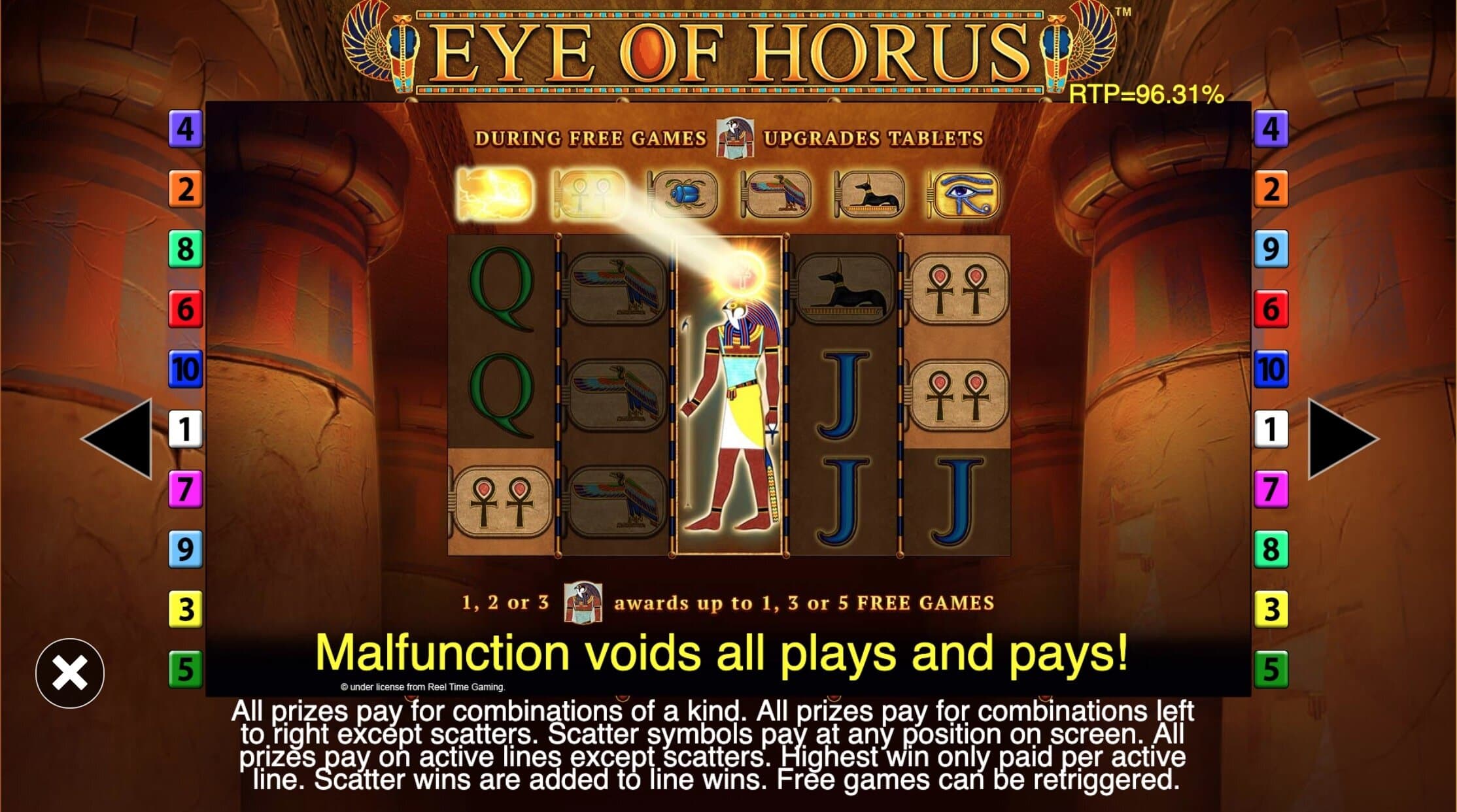
The Eye of Horus online slot has cultivated a loyal following, and a big part of its charm derives from how it looks and feels https://eyeofhorus.games/en-gb/. Across the UK’s vibrant gaming scene, players and critics alike keep returning to one point: its artistic quality and technical finish are something special. The game’s design philosophy chooses a deep, atmospheric pull over loud, flashy effects. It captures the mystery of ancient Egypt not with brute force, but with a careful, compelling visual style. This attention to detail shows that a digital slot’s lasting power often hinges on the nuance of its presentation and the confidence of its aesthetic vision. That focus on quality explains why many now consider it a modern classic, a regular example in conversations about how to do theme right in iGaming.
The Central Aesthetic: An Expedition to Ancient Egypt
Launch the game, and you’re instantly somewhere else. The screen becomes a vivid vision of antique Egypt, painted in deep blues, burnished golds, and soft sandy tones. It sidesteps the bright, cartoonish style you see in many other themed slots. This one seeks something more majestic and grounded. The reels stand before a serene, star-lit temple interior, hieroglyphics faintly visible on the stone walls. Every visual piece, from the symbols to the buttons, serves a single, unified story. The outcome is a slot that appears less like a random number generator and more like an artifact you are able to interact with. It engages your senses prior to you hit spin. Distant desert winds and subtle, mystical chimes on the soundtrack round out the picture. Lighting is managed with a masterful touch. Soft glows outline the edges of stonework and symbols, creating depth and a quiet sense of mystery that begs you to look closer.
Symbol Design: Symbolism with Intent
The images on the reels are lessons in thematic clarity and craft. The low-value symbols take the traditional playing card signs and rework them as refined Egyptian objects. You’ll discover scarab beetles for spades and ankhs for hearts, all rendered in shining gold. For the high-value images, the game shifts to legendary gods and artifacts. There’s the grand god Horus, the knowledgeable goddess Isis, the protective Wedjat eye, and a gorgeous golden necklace. Each one is crafted with detailed line work and a sense of tangible weight, making them recognizable and satisfying when they line up for a win. This imagery does more than decorate. It instructs and pulls you more, turning each round into a tiny narrative about the heritage it draws from. Take the scarab. It’s not just a club substitute. It’s an ancient symbol of rebirth and transformation, adding a dimension of significance to the game. Look at the texturing on that golden necklace. You can notice traces of lapis lazuli and carnelian inlay, a level of workmanship that goes past conventional slot design.
Motion and Visuals: Restraint Enhances Gameplay
Plenty of slots employ screen-shaking animation for all minor happenings. Eye of Horus takes a unique approach. It uses motion with restraint and purposeful direction. A win receives a satisfying chime and a subtle, glowing pulse surrounding the winning symbols. The Horus wild symbol gives a stately flap of its wings as it appears. The big animations are kept for special features. The expanding Eye of Horus wild, for instance, dominates its reel with a forceful, radiant effect. This tiered approach keeps the core gameplay fluid and clean. It also renders the major events feel genuinely important. The motion aids the game rather than fighting with it. UK reviewers often highlight this balance, describing it player-friendly and sophisticated. When the Free Spins round triggers, the shift is indicated by a subtle visual change. The temple backdrop seems bathed in a fresh, more magical light. It announces the change without causing disruption. The expanding wild’s animation is a notable feature. It doesn’t just grow. It opens with a measured, deliberate power that emphasizes its importance on the reels.
User Interface: Clearness Combines with Style Integration

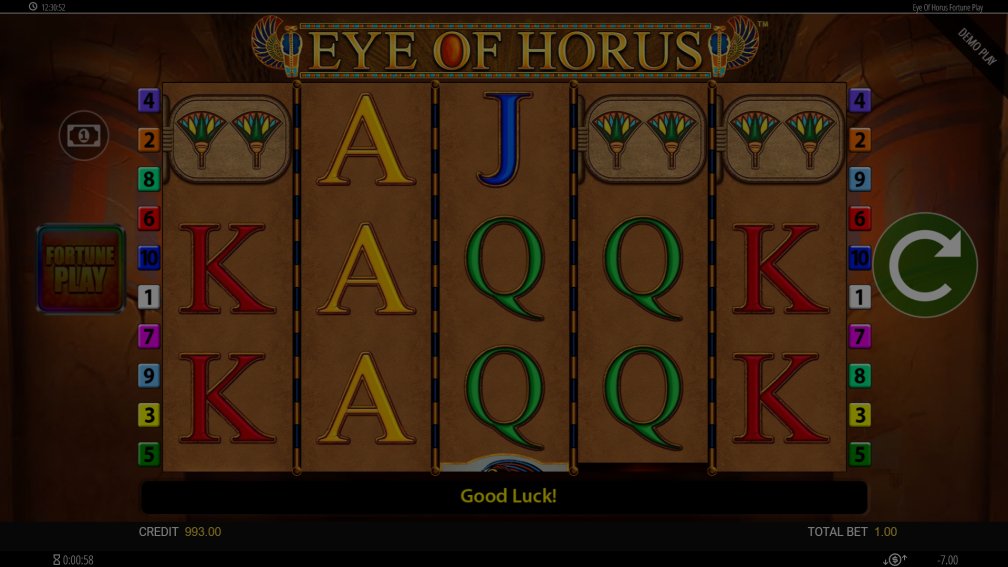
A slot’s user interface is critical, but it’s usually an afterthought. Not here. Eye of Horus blends its control panel into the overall look. Controls for spin, bet adjustment, and autoplay look like ancient stone slabs or engraved metal. The lettering on them is readable and legible. Your credit, bet amount, and latest win are shown visibly, but they don’t conflict with the game’s visuals. The paytable is easy to access and just as beautifully presented. This balance means you’re not once yanked out of the experience by a disruptive, modern-looking menu. Interaction feels intuitive and native to the game world. Designers used muted metallic textures and worn edges on every UI component, making them seem part of the temple structure. Even the figures for your credit amount and bet value use a font that suggests chiseled stone text. It’s a touch that reinforces the motif at every turn, showing a comprehensive design approach.
Technical Performance: Imagery That Works
Beautiful graphics mean very little if they stutter or lag, notably on a phone. The operational efficiency of Eye of Horus is a key component of its aesthetic reputation. The game uses streamlined elements and clean coding to offer clear, seamless imagery on any platform. Whether you’re on a desktop, smartphone, or tablet, the visuals adapt flawlessly. No element loses detail or function. This refinement ensures the design concept reaches you as the developers intended, however you choose to play. With mobile play now dominating the market, this reliable, high-fidelity performance is a key element in the game’s sustained success. Load times are quick, even on lower-bandwidth links, thanks to smart asset management. The graphical rendering stays stable across different operating systems and browsers. That’s a sign of rigorous testing, eliminating the display errors and layout problems that plague less refined games.
Comparative Visual Status in the Market
The industry is crowded with Egyptian-themed slots. Eye of Horus establishes its space with artistic authenticity and subtlety. Many competitors opt for over-the-top 3D graphics, dramatic effects, and a cacophony of sound. This title pursues a timeless, peaceful style that prizes elegance. That choice has connected with users who seek sophistication and thematic substance. Players don’t commend its imagery for being the most technologically cutting-edge. They commend them for being among the most cohesive and atmospheric. The game proves visual superiority isn’t just about polygon quantity or particle details. It’s about implementing a strong artistic guidance steadily, from the smallest icon to the entire setting. Stack it next to titles like “Book of Dead” or “Cleopatra.” Eye of Horus provides museum-piece refinement instead of high-octane adventure. It speaks to a alternative player taste. Its success has likely driven a shift toward more polished styles in more recent games. It shows visual subtlety can be a compelling commercial and critical advantage.
FAQ
What makes the graphics of Eye of Horus stand out?
Its graphics are remarkable because they build a cohesive, true ancient Egyptian world. The color palette of blues and golds is refined. It eschews a cartoonish look, focusing instead on atmospheric immersion with detailed symbols and a calm temple backdrop. The elegance and uniformity of the visual design create an immersive experience that seems grand and carefully inspired.
Are there the animations in the game intrusive?
Far from it. The animations are delicate and meaningful. Wins have a gentle glow. Major features like the expanding wild have more noticeable effects. This tiered approach maintains gameplay smooth and prevents unnecessary distraction. It lets the thematic immersion stay intact. Players and reviewers like this harmony, noting it boosts the game’s flow.
To what extent does the game function on mobile devices?
It operates very well on mobile. The game’s assets are optimized to provide sharp, seamless visuals on smaller screens. There’s no appreciable lag or loss of detail. The interface adjusts intuitively, keeping all functionality and the high-quality look. This reliable cross-platform performance is a key reason for its success with mobile players in the UK.
Is the user interface simple to understand?
Absolutely, it’s apparent and thematically cohesive. Controls resemble antique stone tablets or carved metal, merging with the game’s art. Key information like your bet size and balance is displayed prominently in an readable style. The paytable is also easy to access. This creates the game accessible for beginners and seasoned players from the first spin.
Which are the most rewarding symbols?
The highest-paying symbols are symbols from Egyptian mythology. You want the god Horus, the goddess Isis, the Wedjat eye (Eye of Horus), and an elaborate golden necklace. These are detailed carefully and offer the biggest payouts. The classic playing card suits appear as Egyptian relics like scarabs and ankhs for the lower-value symbols, establishing a ideal thematic order.
Will the game have any graphically striking bonus features?
The most notable is the Expanding Eye of Horus Wild. When it lands and helps create a win, it expands to cover the whole reel, accompanied by a radiant animation. The Free Spins feature, activated by scarab symbols, also enhances the visuals with its own special mode. It maintains the immersive aesthetic while boosting your winning potential.
How the visual style compare to other Egyptian slots?
In contrast to many Egyptian slot games, Eye of Horus chooses classic elegance and authenticity. It avoids chaotic animations and garish colors. Instead, it builds immersion through a consistent, serene art style. This refined approach has won praise for its sophistication and cohesion. It draws players who seek a more atmospheric, less overwhelming experience than flashier rivals offer.
The ongoing praise from the UK market for Eye of Horus emphasizes a basic rule of game design. Lasting player engagement is based on atmosphere and artistic integrity. By crafting a powerful, consistent visual identity, from its iconic symbols to its intuitive interface, the game goes beyond mere functionality. It offers a genuine escape. It reveals that in a digital landscape often vying for attention, clarity, purpose, and thematic depth can build a stronger, more enduring connection with players. Sometimes, timeless aesthetics simply surpass fleeting graphical trends.
